DCMA 14 point analysis
One point matters for understanding it: the analysis assesses the structure of a schedule, not its substantive correctness. It answers whether a plan can calculate and forecast, not whether the planned activities make sense.
What the analysis examines
The 14 checks fall into three groups:
Network logic
Are all activities linked, and do the links describe real dependencies (checks 1 to 4)?
Constraints and float
Is the plan driven by imposed dates rather than logic, and is the float plausible (checks 5 to 9)?
Progress and forecast
Is what was planned actually measured, and does the critical path support a prediction (checks 10 to 14)?
The 14 checks at a glance
acceptable rangethreshold
Network logic
Logic≤ 5 %
No more than 5 % of activities without a predecessor or successor
0 %100 %
Leads (negative lags)0 %
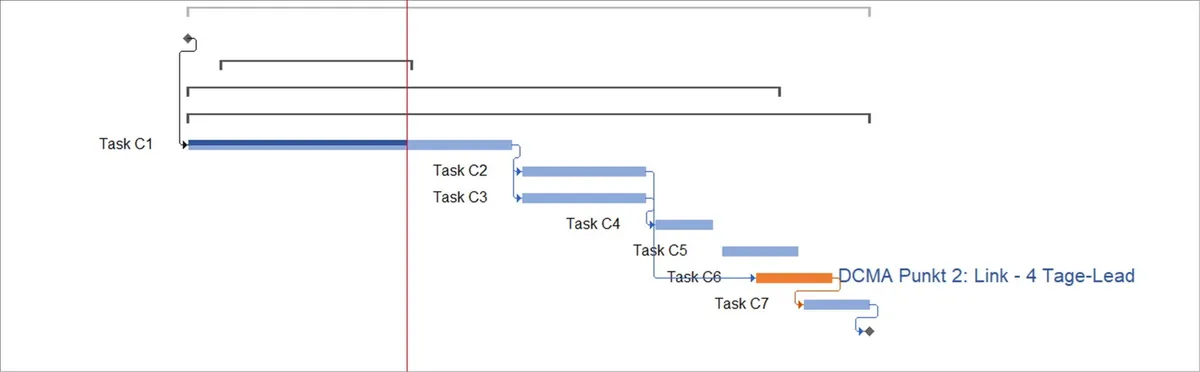
No negative lags between activities (0 %)
0 %100 %
Lags≤ 5 %
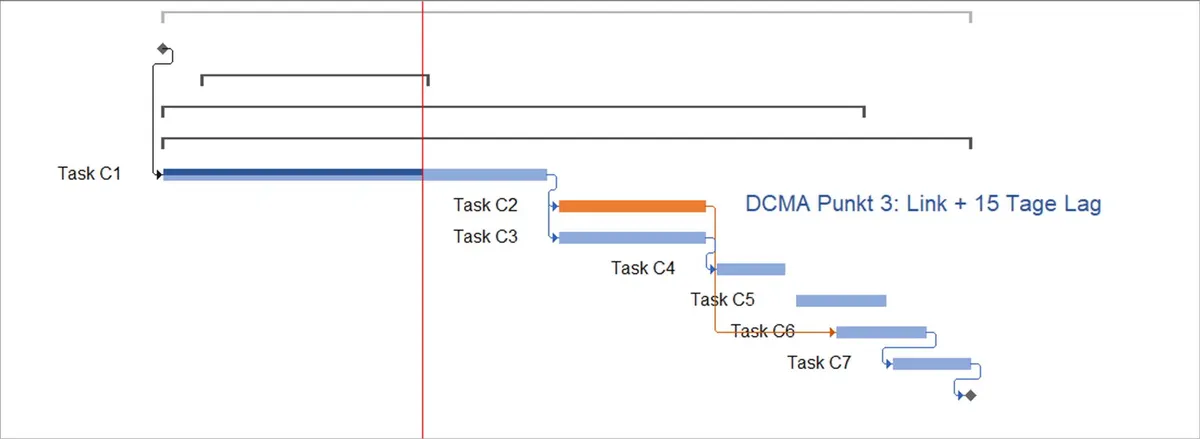
No more than 5 % of relationships carrying a positive lag
0 %100 %
Relationship types≥ 90 %
At least 90 % finish-to-start relationships
0 %100 %
Constraints and float
Hard constraints≤ 5 %
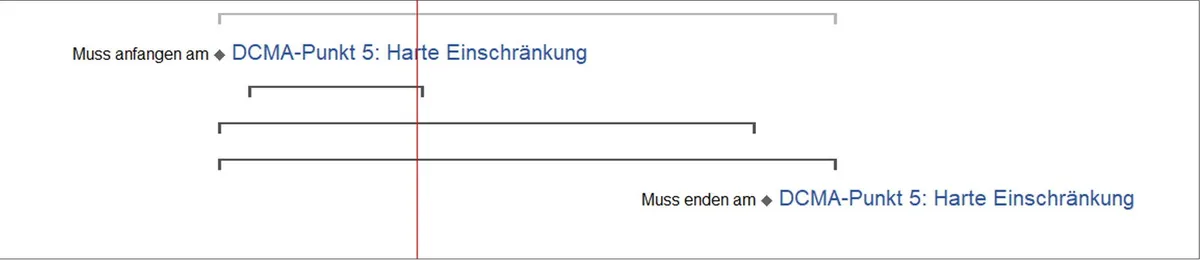
No more than 5 % of activities with a hard constraint
0 %100 %
High float≤ 5 %
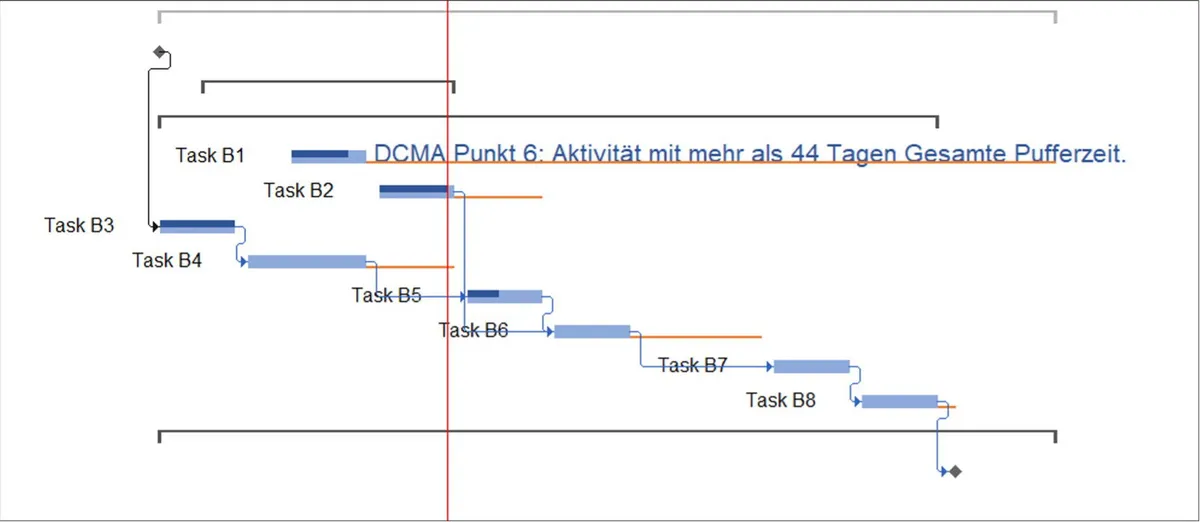
No more than 5 % of activities with total float above 44 working days
0 %100 %
Negative float0
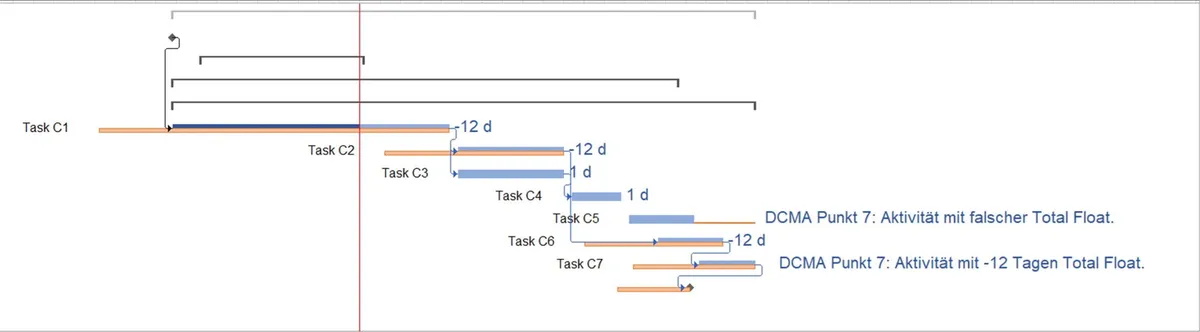
No activity with total float below 0
0 %100 %
High duration≤ 5 %
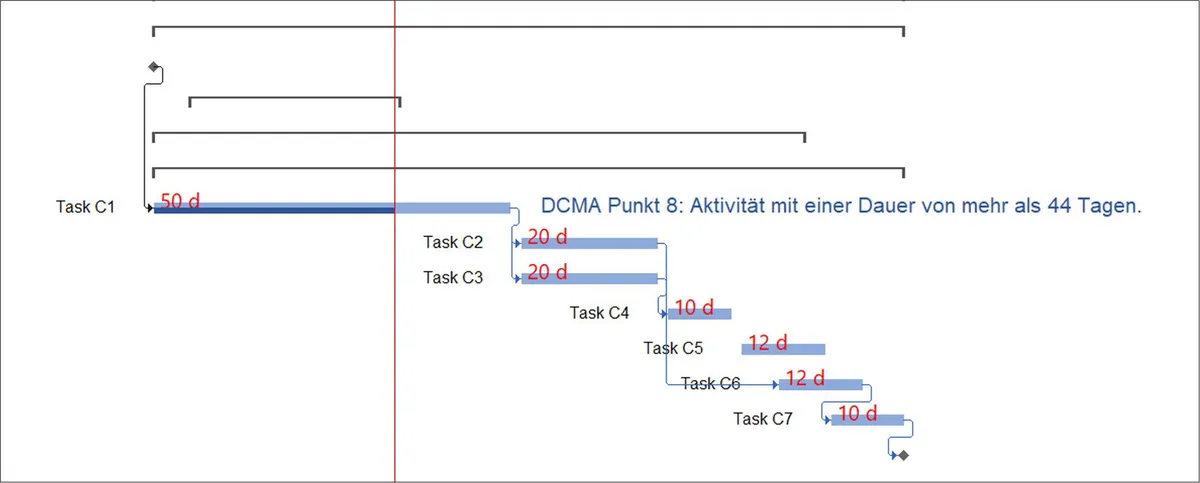
No more than 5 % of activities with a remaining duration above 44 working days
0 %100 %
Invalid dates0
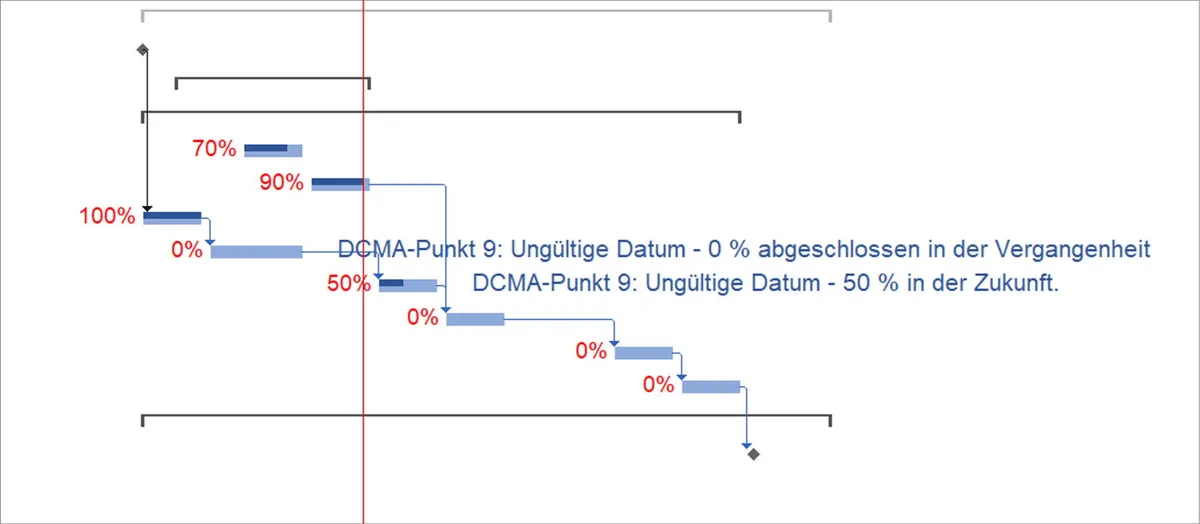
No actual dates in the future and no forecast dates in the past
0 %100 %
Progress and forecast
Resources100 %
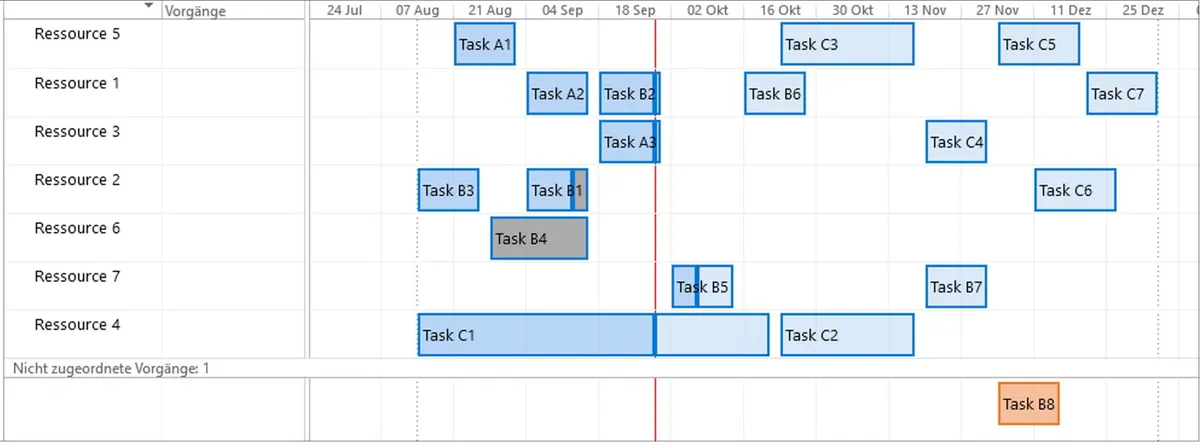
Every activity with a duration greater than 0 carries resources or cost
0 %100 %
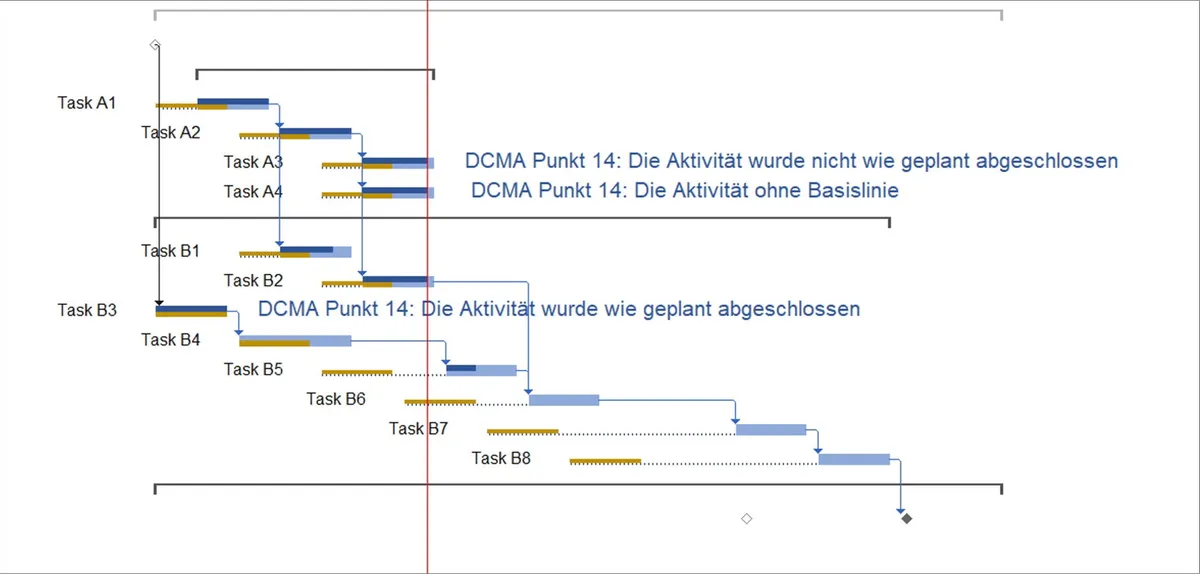
Missed tasks≤ 5 %
No more than 5 % of activities finishing later than in the baseline
0 %100 %
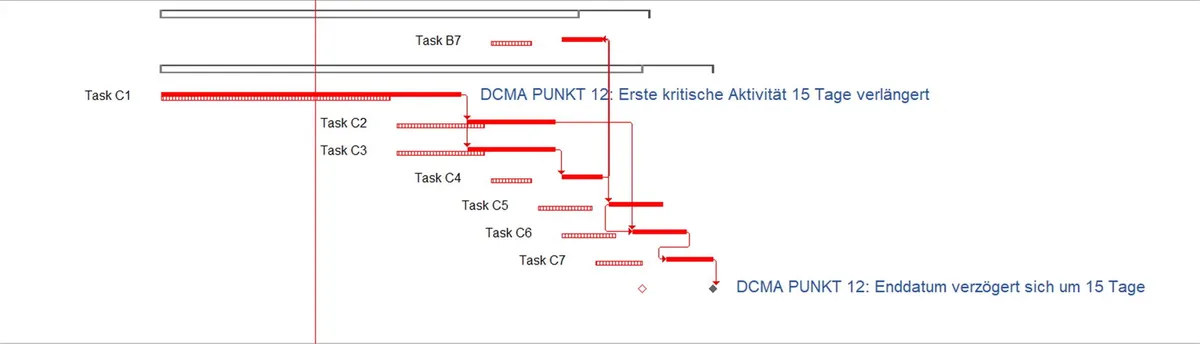
Critical path test
An artificial delay on a critical activity moves the completion date by the same amount
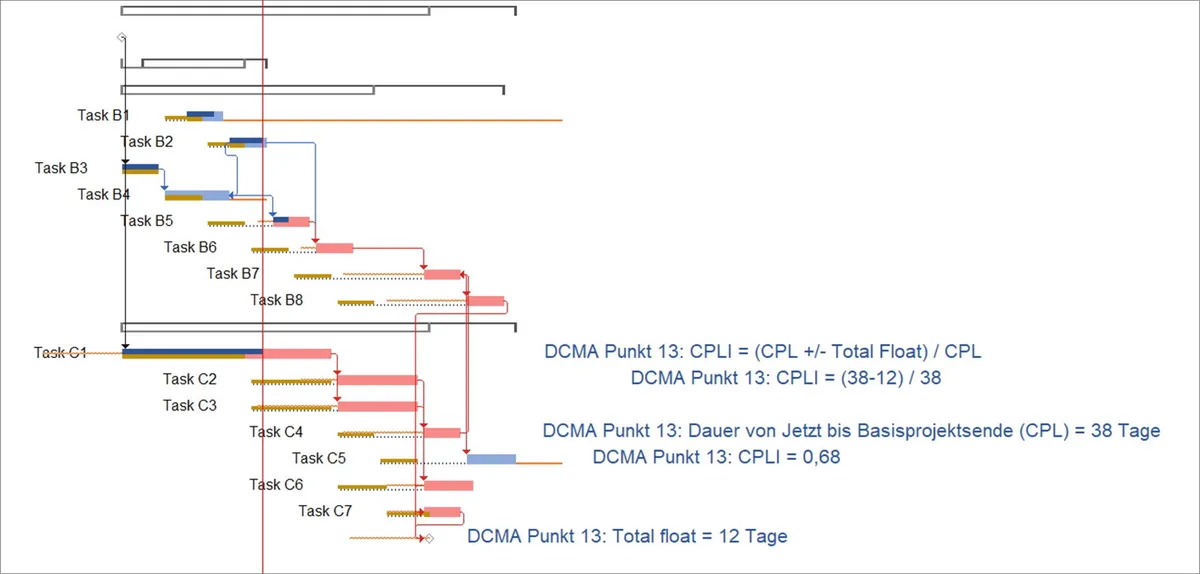
CPLI (critical path length index)≥ 0.95
At least 0.95
01.2
BEI (baseline execution index)≥ 0.95
At least 0.95
01.2
The thresholds above are the DCMA reference values. In practice they are agreed per project: an expansion inside an operating plant has more imposed dates than a greenfield build, for good reasons. What matters is that deviations are justified and stay stable across the project lifetime.
What the checks look like in a schedule
The diagrams show individual checks on bar charts from a scheduling tool. The activities are generically named, no project data is shown.
Technical detail
Where DCMA 14 comes from
The 14 point analysis originates with the Defense Contract Management Agency (DCMA), the contracting authority of the US Department of Defense. It was developed to establish quickly whether a submitted schedule can be assessed and steered at all. Since the publication of the "14 Point Schedule Assessment" the method has spread far beyond its origin. Today it is used in chemicals, pharma, energy and infrastructure as well.
How CEPT works with DCMA 14
We assess every schedule we take over before the first control cycle and in every update cycle after that. The results go into the project report as a fixed metric, so planning quality stays comparable over the lifetime of the project. Failed checks are not treated as a defect list but prioritised: whatever distorts the forecast is repaired first.
The assessment itself runs automatically; judging the findings remains expert work. A plan can pass all 14 checks and still miss the point of the project. Conversely, a plan failing several checks is virtually never steerable.
Frequently asked questions about DCMA 14
What is the DCMA 14 point analysis?
The DCMA 14 point analysis is a set of 14 checks for assessing the quality of project schedules, developed by the US Defense Contract Management Agency. It examines the structure of a plan (links, constraints, float, progress and forecast quality) rather than its substantive correctness. A plan that fails several checks can, as a rule, not be steered reliably.
Is DCMA 14 a certification?
No. There is neither a certificate nor an accrediting body; DCMA 14 is an openly documented assessment method. Clients can nevertheless require compliance contractually, and in large projects that is increasingly common.
Which thresholds count as passed?
The reference values include: no more than 5 % of activities without a predecessor or successor, no negative lags, at least 90 % finish-to-start relationships, and a CPLI and BEI of at least 0.95. These values come from the defence sector and are usually adjusted for industrial projects. More important than any single threshold is that deviations are justified and stable over time.
From what project size is the assessment worthwhile?
The assessment becomes worthwhile from roughly 300 to 500 activities, because structural errors in smaller plans can still be found by careful reading. With several trades, external interfaces or a multi-year duration it belongs in every update cycle. The effort per assessment is low once the analysis runs automatically.
Have your schedule assessed to DCMA 14
We assess your current schedule and discuss the findings with you, with prioritised actions instead of a defect list.